People ask me this question almost every single week, usually in the first message they ever send me: "Brenda, when should we come?" And I understand why. You are planning something big, maybe the trip of your life, and you want to get it right. So let me tell you what I actually tell my own guests, not what a travel brochure tells you.
I grew up just outside Arusha, close enough to Mount Meru that I could see it from our yard most mornings. My family has been in this region for generations, and by the time I was in secondary school I already knew every road between Arusha and the parks better than I knew the streets of town. Later I trained in hospitality and safari operations, and I also spent years working in Zanzibar, so between the two, I have watched thousands of visitors move through this country in every month of the calendar.
There is no bad month to visit Tanzania. But there is a right month for you, depending on what you actually want to see and feel.
The dry season, June through October
This is what most people picture when they imagine Africa. The grass is short, the bush is thin, and the animals have to gather at the rivers and waterholes because there is no water anywhere else. This makes game viewing easier, especially for first-time visitors who want to see a lot in a short trip. The mornings in Ngorongoro and the Serengeti highlands can actually be cold, I always tell my guests to pack a warm layer for the early game drives.
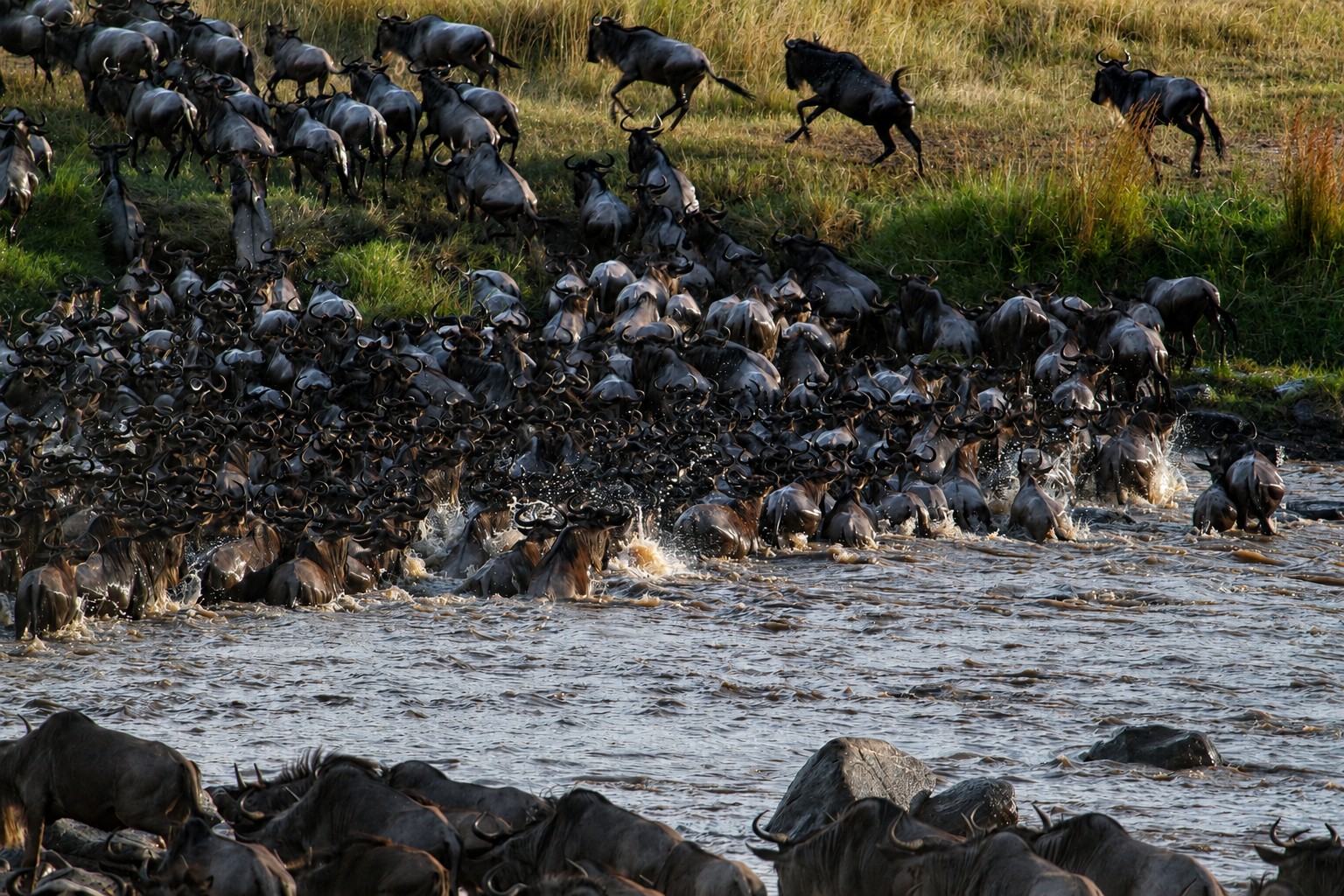
This is also when the Great Migration usually reaches the northern Serengeti and crosses the Mara River, sometime between July and September, though I have to be honest with you, the wildebeest do not read our calendars. If seeing a river crossing is the whole reason for your trip, build in a few extra days near the Mara if you can, and go with a guide who is in radio contact with other vehicles in the park.
The green season, November through May
This is my personal favorite, and I say that as someone who has done this every single month for a long time now. The rains come, usually in short afternoon bursts, and the whole landscape turns this deep green that you almost never see in photographs of Tanzania. Baby animals are being born, the birdlife is at its best, and the parks are quiet, genuinely quiet.
"This is not a performance for tourists. This is what has been happening on these plains for longer than any of us have been alive."
January and February, in particular, are calving season on the southern Serengeti plains. It is not for everyone, some guests find it hard to watch, but I always tell people, this is the real thing.
March through May brings the heavier rains, and this is genuinely the quiet season. I will not pretend it is the easiest time to travel. But if budget matters to you, or if you simply want Tanzania without the crowds, this is when I would send my own family.
What I actually ask my guests before I answer
Do you want to see the migration specifically, or are you happy with abundant wildlife generally. Do you want to combine your safari with time on the beach in Zanzibar. And how much does crowding bother you.
If you are combining the mainland with Zanzibar, June through October tends to line up well for both. The ocean does not follow the same script as the savannah.
The honest answer
Come when you can actually come. Tanzania does not perform for a calendar. It simply is what it is, every day of the year, and I would rather you come and meet it than keep waiting for conditions that a brochure told you to wait for.
If you want, tell me what matters most to you, and I will tell you honestly which month I would book if this were my own family.