I was in the northern Serengeti eleven days ago, and I watched maybe three hundred wildebeest stand at the edge of the Sand River for almost two hours before a single one of them moved. Just standing there. Testing the wind, testing each other, testing something none of us watching could see. Then one young bull walked in, and within four minutes the whole group had crossed. That is the migration in July, in one small moment. Everyone talks about the big crossings in August like they are the whole story, but what is happening right now, this week, is its own kind of extraordinary, and I want to tell you about it honestly because I think most of what gets written about this time of year is not quite true to what is actually out there.
What is actually happening on the ground right now
The main herds spent June pushing through the western corridor and crossing the Grumeti, that river gets less attention than the Mara but the crocodiles there are just as patient and just as large. By the start of July, the front of the migration had reached the northern Serengeti, and what we are seeing now, in the second week of the month, are the scouting movements. Smaller groups, sometimes a few hundred animals, sometimes a few thousand, pushing up toward the Kenyan border and testing the Sand River and Talek River crossings before the larger body of the herd catches up.
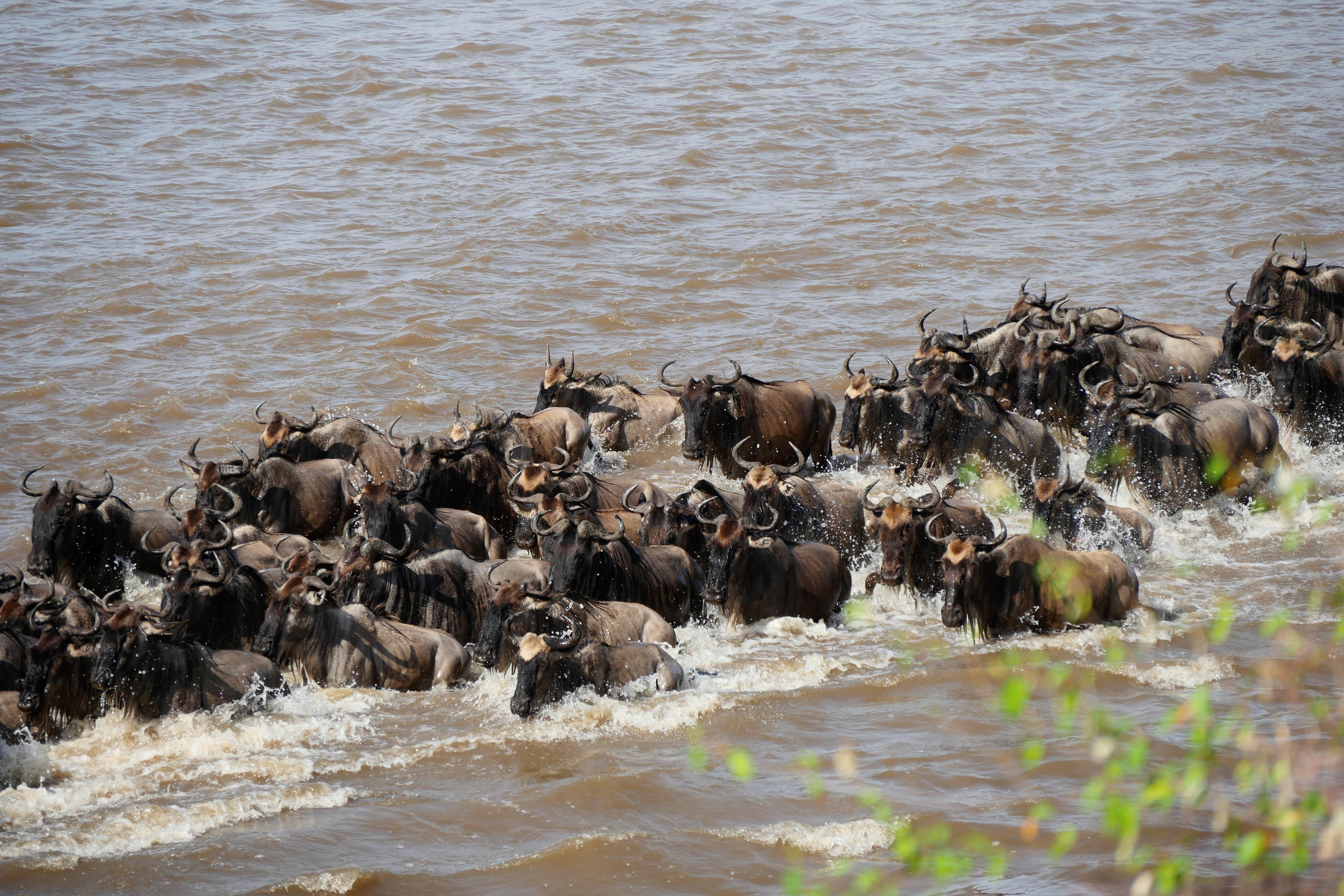
This is not the postcard image people expect. It is quieter, a bit more tense, and honestly more interesting to watch as someone who has spent years reading these animals. You can see the hesitation. You can see a lead cow walk to the bank, drink, look at the water, and turn back three times before anything happens. When you are used to nature documentaries condensing this into thirty seconds, watching the real thing unfold over two hours teaches you something about patience that I do not think any other kind of wildlife viewing does.
Why everyone's feed is suddenly full of migration videos
If you have been on Instagram or TikTok this week and noticed more wildebeest crossing videos than usual, this is why, the early crossings are dramatic enough to film and share, and guides across the ecosystem are catching them right now. I want to be honest with you though, what you are seeing in a fifteen second clip is usually the most chaotic thirty seconds of a crossing that took an hour to build up to. That buildup is where the real experience is, the tension before the movement, and no video captures that properly. You have to be sitting there yourself, engine off, waiting.
If you are flexible and can still get a trip together for August, this is genuinely a good year to try. If August fills up, September is nearly as strong and considerably quieter, fewer vehicles at each crossing point, which honestly makes for a better experience in my opinion, not just a consolation prize. I have sat at September crossings with two other vehicles instead of twenty, and there is something in that quiet that August crowds do not allow for.
What nobody tells you about actually watching a crossing
You will wait. That is the part people are not prepared for. I have had guests sit with me for four hours at a crossing point with nothing happening, and I have had it happen inside of ten minutes. There is no way to know which one you will get, and any guide who tells you they can predict the exact hour is not being straight with you. What a good guide can do is read the signs, the way the herd is bunching at the water's edge, the way they keep circling back, the direction the wind is blowing the scent of crocodiles toward or away from the herd. My father used to say the river tells you when it is ready, not the wildebeest. I did not understand that as a young guide. I understand it now.
What I would tell you if you asked me directly
Come see it. Not because I need to convince you, but because I have watched this exact event more times than I can count and it has never once felt routine to me. There is a specific sound a crossing makes, thousands of hooves hitting water and rock at the same time, that you carry with you long after the trip ends. Whatever else you plan around your safari, build in real time at the river, not just a drive-by. Sit, wait, let your guide read the herd. That patience is the whole experience, not an inconvenience on the way to it.